Best Matlab Books to Buy in October 2026
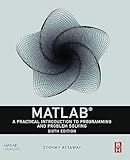
MATLAB: A Practical Introduction to Programming and Problem Solving


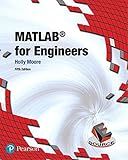
MATLAB for Engineers
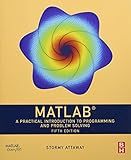
MATLAB: A Practical Introduction to Programming and Problem Solving
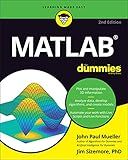
MATLAB For Dummies (For Dummies (Computer/Tech))
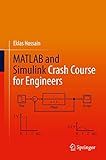
MATLAB and Simulink Crash Course for Engineers
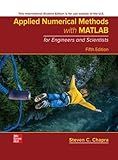
ISE Applied Numerical Methods with MATLAB for Engineers and Scientists
- COMPREHENSIVE MATLAB EXAMPLES ENHANCE PRACTICAL LEARNING FOR ENGINEERS.
- UPDATED CONTENT COVERS MODERN APPLICATIONS FOR TODAY'S CHALLENGES.
- CLEAR EXPLANATIONS SIMPLIFY COMPLEX NUMERICAL METHODS FOR ALL LEVELS.
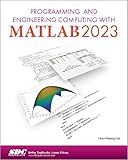
Programming and Engineering Computing with MATLAB 2023
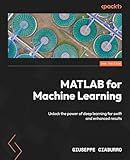
MATLAB for Machine Learning: Unlock the power of deep learning for swift and enhanced results
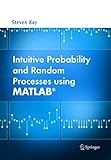
Intuitive Probability and Random Processes using MATLAB
MATLAB continues to be a powerful tool for engineers, scientists, and mathematicians. One of its most potent features is symbolic math, which allows for analytical solutions and manipulations without numerical approximations. This article will guide you through using symbolic math in MATLAB in 2026, and how to select the right MATLAB books to deepen your understanding of symbolic computation and other MATLAB features.
Introduction to Symbolic Math in MATLAB
Symbolic math is essential when dealing with algebraic computations, calculus, and differential equations analytically. Unlike numerical calculations, symbolic computations allow for exact solutions and manipulations of mathematical expressions. In MATLAB, symbolic computations are handled by the Symbolic Math Toolbox, which provides functions for calculus, algebra, equation solving, and more.
Getting Started with Symbolic Math
To use symbolic math in MATLAB, you first need to declare symbolic variables and expressions. Here's a simple example:
syms x;
f = x^2 + 3*x + 2;
In this example, x is declared as a symbolic variable, and f is defined as a symbolic expression. You can perform calculus operations like differentiation and integration on f:
df = diff(f, x);
integral_f = int(f, x);
Solving Equations Symbolically
Symbolic math is extremely beneficial for solving algebraic and differential equations. Here's how you can solve a simple equation:
syms x;
solve(x^2 + 3*x + 2 == 0, x);
This will provide you with the roots of the quadratic equation analytically. For more complex systems, the process remains the same.
Tips for Advanced Symbolic Math Usage
- Simplification: Use the
simplify()function to clean up complex expressions. - Assumptions: Use
assume()to define properties of your symbolic variables, such as being positive or an integer. - Visualization: Combine symbolic expressions with plotting functions to visualize mathematical relationships.
Choosing the Right MATLAB Books
When selecting a MATLAB book, especially for symbolic math, consider the following:
- Coverage: Ensure the book covers the latest features of symbolic math and the Symbolic Math Toolbox.
- Examples: Look for books with practical examples that facilitate hands-on learning.
- Depth vs. Breadth: Decide if you want a comprehensive guide or one that focuses solely on symbolic math.
- Author Expertise: Choose books written by experienced MATLAB users or MathWorks insiders.
Additional Resources
To further enhance your MATLAB skills and explore more functionalities, check out these resources:
- Reading Multiple Text Files in MATLAB: Learn how to handle file inputs efficiently in MATLAB.
- Tips for Working with Structures in MATLAB: Discover best practices for managing data structures in MATLAB.
- Google Cloud Database Integration in MATLAB: Explore how to integrate MATLAB with Google Cloud for data-driven projects.
Conclusion
Symbolic math in MATLAB is an indispensable tool for those who seek exact analytical solutions. By understanding how to use the Symbolic Math Toolbox and choosing the right educational resources, you can significantly enhance your mathematical modeling and computational skills in MATLAB. As you explore symbolic math, remember that continuous learning and leveraging various resources will empower you to tackle more complex challenges with confidence.