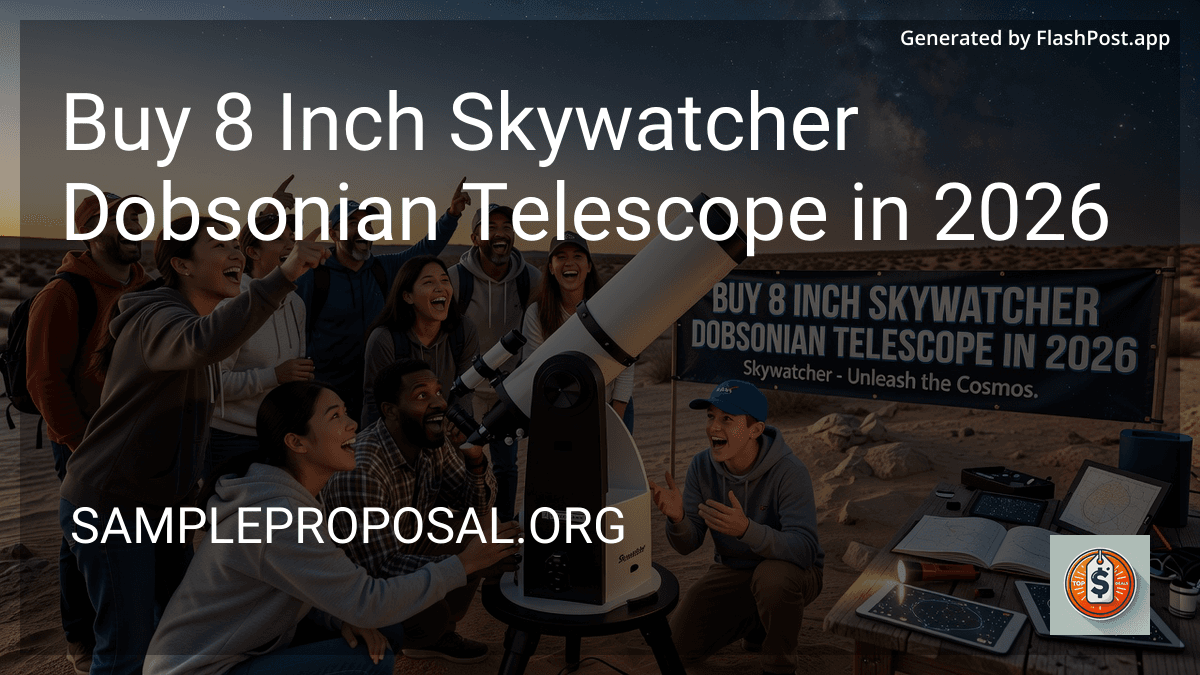
Best SkyWatcher Telescopes in October 2026
Sky-Watcher Sky-Watcher Heritage 130mm Tabletop Dobsonian 5-inch Aperture Telescope – Innovative Collapsible Design – Easy to Use, Perfect for Beginners, Black/White (S11705)
-
STUNNING 130MM APERTURE: ENJOY BREATHTAKING VIEWS AT AN UNBEATABLE PRICE.
-
PORTABLE ALL-IN-ONE DESIGN: EASY TO TRANSPORT FOR SPONTANEOUS STARGAZING.
-
READY TO USE, NO ASSEMBLY: PERFECT FOR BEGINNERS; START OBSERVING RIGHT AWAY!


Sky-Watcher Heritage 150 Tabletop Dobsonian Telescope - Perfect for Beginners, Easy Setup, Portable, and Fun (S11710)
- LARGE 150MM APERTURE FOR STUNNING LUNAR AND PLANETARY VIEWS!
- PORTABLE COLLAPSIBLE DESIGN ENSURES EASY STORAGE AND STABILITY.
- FAST F/5 FOCAL RATIO FOR EXCELLENT LIGHT-GATHERING PERFORMANCE!
Sky-Watcher Classic 200 Dobsonian 8-inch Telescope – Solid-Tube – Simple, Traditional Design – Easy to Use, Perfect for Beginners, White (S11610)
-
BRILLIANT VIEWS: LARGE APERTURE OFFERS BRIGHT, STUNNING VISUALS.
-
EFFORTLESS CONTROL: PROPRIETARY HANDLES ENABLE PRECISE, BALANCED MOVEMENT.
-
COMPLETE PACKAGE: INCLUDES ALL ACCESSORIES FOR AN EXCEPTIONAL EXPERIENCE.
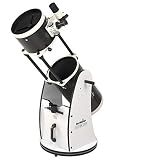
Sky-Watcher Flextube 250 Dobsonian 10-inch Collapsible Large Aperture Telescope – Portable, Easy to Use, Perfect for Beginners, White/Black (S11720)
-
BRIGHT VIEWING EXPERIENCE: ENJOY VIBRANT VISUALS AT BUDGET-FRIENDLY PRICES.
-
PORTABLE & EASY: INNOVATIVE DESIGN COLLAPSES FOR EFFORTLESS TRANSPORT.
-
COMPLETE KIT INCLUDED: COMES WITH ALL ESSENTIAL ACCESSORIES FOR IMMEDIATE USE.
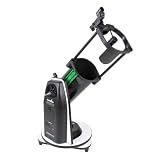
Sky Watcher Sky-Watcher Virtuoso GTI 130P Collapsible Tabletop GoTo Dobsonian Telescope
- BRIGHT 130MM APERTURE FOR STUNNING CELESTIAL VIEWS.
- FAST F/5 OPTICS ENHANCE LIGHT GATHERING FOR CLEAR IMAGES.
- WI-FI ENABLED WITH GOTO CONTROL FOR EASY STARGAZING.
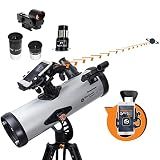
Celestron StarSense Explorer LT 114AZ Newtonian Smartphone Guided Telescope | Smartphone App Sky Navigation, Manual Reflector Telescope, Beginner Deep-Sky Telescope, Bright Celestial Views, Portable
- EASY START: DOCK YOUR PHONE & FIND STARS WITH SIMPLE ARROWS!
- ADVANCED TECH: SKY RECOGNITION TURNS YOUR PHONE INTO A NAVIGATOR!
- CURATED TARGETS: DISCOVER TOP CELESTIAL OBJECTS INSTANTLY!
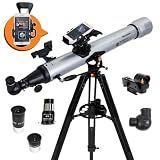
Celestron StarSense Explorer LT 80AZ Smartphone Guided Refractor Telescope | Smartphone App Sky Navigation, Lightweight Manual Refractor Telescope, Perfect First Telescope, Great for Kids & Families
- SMARTPHONE DOCKING FOR EASY CELESTIAL NAVIGATION!
- PATENTED TECH: INSTANT STAR IDENTIFICATION MADE SIMPLE!
- ENJOY STUNNING VIEWS WITH A 2-YEAR WARRANTY & SUPPORT!
If you want to Buy 8 Inch Skywatcher Dobsonian Telescope in 2026, you’re looking at one of the most proven sweet spots in amateur astronomy: enough aperture to show Saturn’s ring gap, Jupiter’s cloud belts, and dozens of Messier objects clearly, yet still manageable enough for one person to move in two pieces.
That matters because the jump from a 5-inch or 6-inch scope to an 8 inch skywatcher dobsonian telescope is not subtle. An 8-inch mirror gathers roughly 78% more light than a 6-inch mirror, which is exactly why this size keeps coming up in observer forums, star party recommendations, and first-serious-scope buying guides year after year.
If you’re comparing models, wondering whether the skywatcher dobsonian telescope line still makes sense in 2026, or debating 8-inch versus 10-inch, this guide gives you the practical answer. You’ll see what to look for, which features actually matter at the eyepiece, where the 8-inch sits against larger and smaller options, and the review patterns that separate a keeper from a frustrating purchase.
How we select products: Our team reviews telescope listings, buyer feedback, owner reports, accessory bundles, setup friction, mount stability, and pricing history across major retailers and astronomy communities. We prioritize scopes with strong long-term owner satisfaction, low complaint rates around collimation and base quality, and feature sets that offer real observing value rather than inflated bundle marketing.
Why Buy 8 Inch Skywatcher Dobsonian Telescope in 2026 instead of a smaller beginner scope?
The best reason to Buy 8 Inch Skywatcher Dobsonian Telescope in 2026 is simple: it’s big enough to feel transformative, but not so big that you stop using it. That balance is where many first-time buyers get it wrong.
A smaller refractor or tabletop reflector can absolutely be fun, especially for kids. But once you’ve seen what an 8-inch Newtonian can do under dark skies-globular clusters starting to resolve, lunar crater walls snapping into focus, brighter galaxies showing shape-it becomes obvious why the telescope dobson skywatcher category has such a loyal following.
Here’s the practical ranking for most buyers:
- Best all-around choice for serious beginners: 8-inch Dobsonian
- Best compact pick for small spaces: 5-inch tabletop reflector
- Best for deeper sky if you can handle the bulk: 10-inch Dobsonian
That’s also why the dobsonian telescope skywatcher format stays relevant. You’re putting more of your budget into aperture and mirror quality rather than computerized electronics or undersized tripods.
What makes the Sky-Watcher Dobsonian design so beginner-friendly?
A skywatcher telescope dobsonian setup is beginner-friendly because the mount is intuitive: push left-right, up-down, and observe. No polar alignment, no fragile equatorial balancing routine, and far less vibration than the bargain tripod scopes that frustrate new users within the first week.
The other advantage is setup time. A typical skywatcher 8 dobsonian telescope can go from storage to observing in under 5 minutes, assuming the base is assembled and the scope has had time to thermally settle.
That simplicity matters more than spec-sheet hype. Most beginners use a telescope more often when it’s easy to carry outside, easy to point, and stable at medium-to-high magnification.
If you’re helping a child start smaller before moving to full-size Dobsonians, this affordable children's telescope guide is a useful comparison point.
Our selection criteria for the best 8-inch Sky-Watcher Dobsonian options in 2026
To evaluate whether an 8 dobsonian skywatcher telescope is worth buying, I focus on six specific factors that actually affect observing-not just marketing language.
1. Mirror aperture and focal ratio
An 8-inch primary mirror is the headline feature, but focal ratio changes usability. Most full-size 8-inch Dobsonians in this class land around f/6, which is forgiving on eyepieces, easier to collimate than faster systems, and excellent for lunar, planetary, and deep-sky general use.
2. Base stability
A wobbly base ruins high-power viewing fast. The better telescope skywatcher configurations use a sturdy particle-board or similar rocker box design with smooth altitude and azimuth motion, so you can track planets without the image bouncing for 3 to 5 seconds after every touch.
3. Focuser quality
A weak focuser creates slop, image shift, and frustration during high magnification sessions. A solid 2-inch focuser with an adapter for 1.25-inch eyepieces gives you better upgrade flexibility and makes wide-field observing noticeably more enjoyable.
4. Included accessories that are actually usable
Many telescope bundles pad value with throwaway accessories. A good skywatcher #telescope package should include at least a workable finder, one or two decent eyepieces, and a smooth focuser rather than a pile of low-grade extras you’ll replace immediately.
5. Cooling and collimation friendliness
Newtonian reflectors perform best when the mirror reaches ambient temperature. An 8-inch mirror is still very manageable here, usually needing 30 to 60 minutes to settle for best planetary sharpness, which is better than the thermal demands of larger reflectors.
6. Owner feedback over time
The strongest review patterns usually come from people who still use the scope after 6 to 12 months. That’s where you see whether the skywatcher dobsonian telescope still earns praise for ease of use, or whether complaints pile up around transport weight, sticky motion, or accessory quality.
Buy 8 Inch Skywatcher Dobsonian Telescope in 2026: what features matter most before checkout?
If you only check five things before you buy, make them these.
-
Tube length and storage space
A full-size 8-inch Dobsonian tube is long enough to matter in apartments, hatchbacks, and closet storage. Measure your storage spot first; don’t guess. -
Total carry weight in two pieces
Most buyers move the tube and base separately. If you have stairs, a narrow doorway, or a long walk to your observing area, this matters more than optical theory. -
Finder type
A better finder reduces aiming frustration dramatically, especially for first-light sessions. Poor finders are one of the top reasons beginners think the telescope is harder to use than it really is. -
2-inch eyepiece compatibility
This gives you access to wider true fields of view. That’s especially helpful for large star fields, open clusters, and easier manual target acquisition. -
Support for collimation adjustments
A Newtonian needs periodic alignment. If access is awkward or adjustment hardware feels cheap, you’ll feel that every time sharpness drops.
For owners who want a quick optical tune-up workflow, Freelanceshack offers a decent focusing primer that complements Dobsonian ownership.
Is the 8-inch model better than the Sky-Watcher Heritage 130P or 130mm tabletop version?
For most adults buying one telescope to keep for years, yes-the 8-inch is the better long-term choice.
The skywatcher heritage 130p telescope and skywatcher heritage 130mm tabletop dobsonian telescope are excellent compact options, especially for tight budgets, balconies, and travel. But they live in a different class: more portable, less demanding on storage, and less capable on faint deep-sky targets than a full-size 8-inch.
A quick comparison makes the difference clearer:
| Telescope type | Best for | Main strength | Main limitation |
|---|---|---|---|
| 130mm tabletop Dobsonian | Small spaces, quick sessions | Compact and easy to carry | Needs stable table, less light grasp |
| 8-inch Dobsonian | Most buyers in 2026 | Best balance of performance and usability | Larger footprint |
| 10-inch Dobsonian | Deep-sky priority buyers | More light, stronger faint-object views | Heavier, bulkier, longer cooldown |
| 12-inch Dobsonian | Experienced observers with space | Big aperture impact on galaxies and nebulae | Transport becomes a major issue |
If you’ve been reading comparisons like https://blogweb.me or broad beginner roundups, the key thing to remember is this: tabletop scopes are easier to store, but an 8-inch Dobsonian is often the first telescope that feels truly “observatory-like” in what it reveals.
8-inch vs 10-inch vs 12-inch: which Sky-Watcher Dobsonian size gives the best value?
This is the question serious shoppers always ask, and the answer is more nuanced than “bigger is better.”
8-inch: best overall value for most buyers
The 8 inch skywatcher dobsonian telescope is the value leader because it hits the best tradeoff among light grasp, cooldown, portability, and price efficiency. It’s the size I’d rank first for the majority of backyard astronomers.
10-inch: best upgrade if deep-sky is your obsession
A skywatcher 10-inch dobsonian telescope or skywatcher 10 inch dobsonian telescope gives a noticeable boost on dim galaxies, nebulae, and globular clusters. But weight and tube bulk rise enough that some owners observe less often than they expected.
12-inch: best only if you already know your logistics work
The skywatcher 12 inch dobsonian telescope and skywatcher 12-inch dobsonian telescope deliver more “wow” on dark-sky deep-sky objects, no question. Yet this size often crosses the line where transport, storage, cooldown, and lifting become the real deciding factors-not optics.
Here’s the blunt recommendation:
- Best for 80% of buyers: 8-inch
- Best for committed dark-sky observers with room to spare: 10-inch
- Best for experienced users who already know they’ll handle the bulk: 12-inch
If you want a wider overview of the dobsonian reflector telescope category, that comparison can help frame where an 8-inch fits.
What do real reviews reveal before you Buy 8 Inch Skywatcher Dobsonian Telescope in 2026?
The most consistent positive review pattern is not “great optics,” even though that shows up a lot. It’s this: owners actually keep using it.
Across user feedback on Dobsonian reflectors, the strongest satisfaction signals usually come from:
- Stable views at 150x to 200x in average seeing
- Easy manual tracking once motion is adjusted properly
- Noticeably better planetary detail than cheap tripod-mounted scopes
- Deep-sky performance that still impresses after the first month
The most common complaints are also predictable:
- Base assembly takes longer than some buyers expect
- The tube feels larger in person than it did in photos
- Included eyepieces are serviceable, not premium
- New users sometimes mistake poor atmospheric seeing for optical issues
That last point is huge. A lot of “blurry at high power” complaints come from warm mirrors, bad seeing, or rushed focusing rather than bad optics.
💡 Did you know: Atmospheric seeing often limits useful magnification more than the telescope does. On many average nights, 150x to 200x looks sharper than pushing beyond 250x, even with a capable 8-inch reflector.
Best budget range breakdown before you Buy 8 Inch Skywatcher Dobsonian Telescope in 2026
Rather than thinking in absolute pricing, it helps to think in value tiers.
Entry tier: bare-bones 8-inch packages
These are best if you already own accessories or you plan to upgrade selectively. The value is in aperture first, but expect more compromises in finder quality, included eyepieces, and fine-motion feel.
Mid-range sweet spot: the best place to buy
This is where the best skywatcher dobsonian telescope value usually sits. You typically get the stronger accessory package, 2-inch compatibility, and fewer compromises that lead to immediate extra spending after unboxing.
Premium setup budget: scope plus real accessories
This is the smartest budget if you want the full experience from night one. A quality collimation tool, a better low-power eyepiece, a planetary eyepiece, and a comfortable observing chair often improve your sessions more than jumping straight from 8 inches to 10 inches.
Pro tip: reserve part of your budget for accessories and transport practicality. A simple fan, red flashlight, and star atlas often improve real-world observing more than chasing raw aperture alone.
If you’re cross-shopping broader deal content and run into unrelated retail pages, use caution-some aggregators are noisy. For example, read more here shows how off-topic some search paths can get.
Red flags to watch before buying a Sky-Watcher Dobsonian telescope
Some warning signs show up again and again, and they’re worth taking seriously.
- Underspecified accessory lists: if the listing is vague about finder, focuser size, or included eyepieces, expect compromises.
- Seller photos that hide the base details: smooth base motion is a major part of Dob performance.
- Too much emphasis on extreme magnification claims: marketing numbers can be wildly unrealistic.
- Little mention of collimation support: reflectors need alignment, and the seller should acknowledge that.
- Weak packaging feedback: mirror systems need solid shipping protection.
I’d also be cautious with thin-content guides that don’t explain optical basics. Sources like Blogspot can be useful for quick scans, but they rarely replace detailed owner-focused evaluations.
And if you find unusual technical sourcing chains in product research, always check source before trusting specs or compatibility claims.
Should you Buy 8 Inch Skywatcher Dobsonian Telescope in 2026 if you live in the city?
Yes-if you understand what city skies change and what they don’t.
Light pollution hurts faint nebulae and galaxies far more than it hurts the Moon, planets, double stars, and brighter clusters. In suburban and urban conditions, an 8 inch skywatcher dobsonian telescope still gives excellent lunar detail, very satisfying planetary views, and strong performance on brighter deep-sky objects.
The bigger challenge in cities is often storage and carrying the scope outside. If your observing path includes elevators, tight stairwells, or parking-lot transport, that physical routine should influence your decision as much as optical performance.
The single best recommendation for buyers in 2026
If you’re choosing one telescope for the next several years, Buy 8 Inch Skywatcher Dobsonian Telescope in 2026 if and only if you have the storage space and will realistically carry it outside at least twice a month. The most important criterion is not maximum aperture-it’s whether the telescope is easy enough for you to use often.
Frequently Asked Questions
how to focus skywatcher telescope
Start with the lowest-power eyepiece and aim at a bright star or distant terrestrial object in daylight. Turn the focuser slowly until the image becomes smallest and sharpest, then fine-tune after the telescope has cooled to outdoor temperature.
is an 8 inch skywatcher dobsonian telescope worth it for beginners
Yes, for most serious beginners it’s one of the best long-term telescope sizes because it combines strong light-gathering power with simple manual operation. It’s easier to use than many tripod-mounted beginner scopes and powerful enough that you won’t outgrow it quickly.
what can you see with an 8 inch skywatcher dobsonian telescope
Under average skies, you can see detailed lunar craters, Saturn’s rings, Jupiter’s cloud bands, bright nebulae, star clusters, and many galaxies as faint smudges or structured patches. Under darker skies, the improvement on globular clusters and Messier objects is dramatic.
is the skywatcher 10 inch dobsonian telescope better than the 8 inch
The 10-inch shows fainter deep-sky objects more strongly, but it is heavier, bulkier, and slower to cool. For most buyers, the 8-inch is the better overall choice because it gets used more often and still delivers excellent performance.
what is the difference between skywatcher heritage 130p telescope and a full-size dobsonian
The Heritage 130P is a compact tabletop reflector designed for portability and quick setup, while a full-size Dobsonian offers substantially more aperture and a floor-standing mount. The tabletop model is easier to store, but the 8-inch provides a much bigger jump in planetary and deep-sky capability.