Best Proposal Writing Kits to Buy in October 2026

Crtiin 18 Pcs Flower Girl Gifts Wedding Proposal Box Kit from Bride Will You Be My Flower Girl Gifts Card Tumbler Daisy Necklace Sunglasses Diamond Pen Hair Ring Mirror Green Sage Wedding Party Favors
- COMPLETE FLOWER GIRL SET: TWO GIFT BOXES WITH MATCHING ACCESSORIES!
- STUNNING JEWELRY: DAZZLE WITH COORDINATED HAIR TIES AND NECKLACES.
- PRACTICAL & CUTE: DIAMOND PEN AND FLOWER MUGS FOR ANY OCCASION!


16 Pcs Flower Girl Proposal Box Kit Gifts Round Glasses Necklace Pearl Bracelet Diamond Pen Hair Scrunchies Rose Will You Be My Flower Girl for Wedding(Rose Pink)
-
BEAUTIFUL DOUBLE-SIDED DESIGN ENHANCES GIFT PRESENTATION.
-
INCLUDES STYLISH ACCESSORIES FOR KIDS, IDEAL FOR ANY OCCASION.
-
PERFECT PROPOSAL BOX FOR FLOWER GIRLS, CREATING LASTING MEMORIES.

Wedding Guest Scroll Blank Paper with Wood Rods 7.1 x 31.5 Inch with Feather Ballpoint Pen & Velvet Keepsake Pouch for Guests to Sign Vintage Writing Kit for Adults
- 💍 ELEGANT SCROLL REPLACES BULKY GUEST BOOKS FOR TIMELESS SIGNATURES.
- 🖋️ EASY-TO-USE FEATHER PEN ENSURES MESS-FREE GUEST CONTRIBUTIONS.
- 👛 LUXE PACKAGING KEEPS YOUR SCROLL PRISTINE FOR ANY OCCASION.
The Grantwriter's Start-Up Kit: A Beginner's Guide to Grant Proposals Workbook
- QUALITY ASSURANCE: EVERY USED BOOK IS CAREFULLY INSPECTED FOR INTEGRITY.
- SUSTAINABLE CHOICE: PROMOTE ECO-FRIENDLY READING WITH REUSED BOOKS.
- BUDGET-FRIENDLY: ACCESS POPULAR TITLES AT A FRACTION OF THE NEW PRICE.
16 Pcs Flower Girl Proposal Box Kit Gifts Round Glasses Necklace Pearl Bracelet Diamond Pen Hair Scrunchies Rose Will You Be My Flower Girl for Wedding(Blue)
-
EYE-CATCHING DESIGN: DOUBLE-SIDED PRINTING WITH STUNNING GRAPHICS!
-
VERSATILE GIFTS: LARGE STORAGE BOX, PERFECT FOR FLOWER GIRL TREASURES!
-
COMPLETE EXPERIENCE: ACCESSORIES AND STYLING TOOLS FOR SPECIAL MOMENTS!
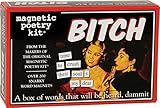
Bitch-Magnetic Poetry Kit
-
ENDLESS CREATIVITY: OVER 200 MAGNETIC WORDS FOR LIMITLESS FUN AND ART.
-
MIX & MATCH: COMPATIBLE WITH VARIOUS KITS FOR UNIQUE COMBINATIONS!
-
PERFECT GIFT: IDEAL FOR POETS, WRITERS, OR AS A QUIRKY GRADUATION PRESENT!
REALIZE YOUR WRITING DREAMS: Actionable Tips on Writing, Publishing and Marketing
A student project proposal typically includes several key components. It begins with a title page that provides the project title, the student's name, and any relevant institutional affiliations. An introduction follows, outlining the purpose and significance of the project, establishing the context, and stating the main objectives or research questions. The literature review summarizes existing research and theoretical background relevant to the project, highlighting gaps that the current project aims to address. The methodology section details the proposed research design, including data collection and analysis methods, ensuring they align with the project objectives. A project timeline provides a realistic schedule for completing various stages of the project, while the budget outlines estimated costs and any required resources. Finally, references or a bibliography cite all sources used in preparing the proposal, ensuring academic integrity and providing readers with pathways to further explore the background materials.
What is a risk assessment in a project proposal?
A risk assessment in a project proposal is a systematic process of identifying, analyzing, and evaluating potential risks that could adversely impact the successful completion of a project. It is an essential component of project planning that helps stakeholders understand the potential challenges they might face and plan for contingencies. Here’s what a risk assessment typically involves:
- Identification of Risks: This step involves listing all possible risks that could affect the project. These might include financial risks, technical challenges, resource availability, legal issues, environmental factors, and any other uncertainties that could hinder project success.
- Risk Analysis: Once risks are identified, they are analyzed to understand their potential impact and likelihood. This often involves assessing both qualitative and quantitative factors to determine how each risk might affect the project's objectives, timeline, costs, and quality.
- Risk Evaluation: After analyzing the risks, they need to be evaluated to prioritize them. This involves determining which risks are most critical in terms of their potential impact and probability. Various tools and techniques, such as risk matrices or impact-probability charts, are often used to rank risks.
- Mitigation Strategies: This step involves developing strategies to manage or mitigate high-priority risks. Strategies might include avoiding the risk, transferring it (e.g., through insurance), mitigating it through control measures, or accepting the risk with a contingency plan in place.
- Monitoring and Review: Risk assessment is not a one-time exercise but an ongoing process. Regular monitoring and review ensure that risks are managed effectively throughout the project lifecycle. This also allows for adjusting strategies as necessary based on new information or changes in the project environment.
Including a comprehensive risk assessment in a project proposal demonstrates to stakeholders that the project team has considered potential obstacles and is prepared to manage them, thereby increasing the project’s credibility and chances for approval.
How to list references in a project proposal?
Listing references in a project proposal is crucial to lend credibility to your work and acknowledge the sources that have informed your research or methodology. Here’s a guide on how to properly list references:
- Choose a Citation Style: Determine which citation style is appropriate for your field or required by your organization. Common styles include APA, MLA, Chicago, or IEEE.
- Collect Reference Information: For each source, gather all necessary details, which typically include: Author(s) or organization Title of the work Title of the journal, book, or report Publication year Publisher or publication venue Volume and issue number (for journals) DOI or URL (for online sources) Page numbers (if applicable)
- Organize References: List your references at the end of your proposal under a dedicated "References" or "Works Cited" section. Arrange them alphabetically by the last name of the first author.
- Formatting: Format the references according to the chosen citation style. Each style has specific guidelines for how different types of sources should be formatted. Here are examples in a few styles: APA: Book: Author, A.A. (Year). Title of work: Capital letter also for subtitle. Publisher. Journal: Author, A.A. (Year). Title of article. Title of Periodical, volume number(issue number), pages. MLA: Book: Author Last, First Name. Title of Book. Publisher, Publication Date. Journal: Author(s). "Title of Article." Title of Journal, vol. number, no. number, Year, pages. Chicago: Book: Author Last, First Name. Title of Book. Place of publication: Publisher, Year. Journal: Author Last, First Name. "Title of Article." Journal Name volume number, no. issue number (Year): page range.
- Consistency: Ensure that you consistently apply the rules of the chosen style throughout your reference list.
- Double-Check for Accuracy: Verify that all citations are accurate and complete. This includes ensuring URLs are correct and that journal names, volume, and issue numbers are present where necessary.
By following these steps, you can create a well-organized and properly formatted reference list that strengthens the credibility of your project proposal.
What is a project rationale in a proposal?
A project rationale in a proposal is a critical section where you provide the reasoning and justification for your proposed project. It explains why the project is necessary and why it is being proposed at this particular time. The rationale typically addresses several key points:
- Problem Statement: Clearly define the problem or need that the project intends to address. This section should provide an in-depth understanding of the issue's significance and impact.
- Background Information: Offer relevant context or background information that helps the reader understand the scope and nature of the problem. This might include historical data, trends, previous research, or any relevant external factors.
- Justification: Explain why this particular project is the best solution for the problem. This includes discussing the project's expected benefits, potential impacts, and how it aligns with strategic goals or objectives of the organization or community involved.
- Stakeholder Needs: Identify who will benefit from the project and how their needs or interests are being considered. This might involve direct beneficiaries, the wider community, or other stakeholders.
- Literature Review: In some cases, citing existing research, studies, or data can help strengthen your rationale by demonstrating that your solution is supported by evidence.
- Uniqueness or Innovation: Highlight what makes your project unique or innovative, particularly if similar projects have been attempted before.
The rationale sets the stage for understanding the necessity and importance of the project, thereby persuading stakeholders, evaluators, or funders of its value and urgency. A well-developed rationale creates a compelling argument for why the project should be undertaken.
What is a content outline for a project proposal?
Creating a content outline for a project proposal involves organizing all relevant information in a structured manner to effectively communicate the project's objectives, methodologies, and benefits. Here is a comprehensive outline you can use:
- Title Page Project Title Project Lead/Author Contact Information Date of Submission
- Table of Contents List all major sections and subsections with page numbers.
- Executive Summary Brief overview of the project Key objectives and outcomes Summary of the proposal's main points
- Introduction Background information or context Statement of the problem or opportunity Purpose of the project proposal
- Project Objectives Specific goals and objectives SMART criteria: Specific, Measurable, Achievable, Relevant, Time-bound
- Project Scope Definition of what is included and excluded High-level deliverables and milestones
- Methodology/Approach Detailed plan of action Techniques, methods, or strategies to be used Any research or analysis involved
- Project Timeline Phases of the project Key milestones and deadlines Gantt chart or timeline diagram (optional)
- Resources Required Personnel and roles Tools, technology, and equipment Materials and facilities
- Budget and Financial Plan Detailed budget breakdown Funding requirements and sources Cost-benefit analysis or ROI (Return on Investment)
- Risk Management Potential risks and challenges Risk mitigation strategies
- Impact and Benefits Expected outcomes and benefits Impact analysis on stakeholders Long-term sustainability
- Evaluation and Metrics Criteria for success Methods for monitoring progress and evaluation
- Conclusion Recap of the key points Final pitch for support or approval
- Appendices Additional supporting documents Charts, graphs, or data sets Detailed technical information
- References Cited works and sources
This structure ensures a clear, logical flow of information, making it easy for stakeholders to understand the proposal and its merits. Tailor the details of each section based on the specific needs and requirements of your project and audience.
How to present data collection methods in a proposal?
When presenting data collection methods in a proposal, it's crucial to be clear, concise, and detailed, ensuring that the methods align with the research objectives. Here’s a structured way to present these methods:
- Introduction to Data Collection: Begin with a brief overview that explains the importance of data collection in your study and how it relates to your research questions or hypotheses.
- Data Collection Objectives: Clearly state the objectives of your data collection. Explain what you aim to achieve and why these methods are suitable for addressing your research questions.
- Types of Data: Specify the types of data you plan to collect: qualitative, quantitative, or both. Explain the rationale behind choosing these data types.
- Methods Description: Qualitative Methods: Describe methods such as interviews, focus groups, or observations. Detail how these will be conducted, including the setting and the duration of data collection. Quantitative Methods: Explain methods like surveys, experiments, or secondary data analysis. Include details on survey instruments, sample size, and variables measured. Mixed Methods: If using a combination, explain how you will integrate both qualitative and quantitative approaches.
- Tools and Instruments: Detail any tools or instruments you will use for data collection, such as questionnaires, software, or recording devices. Include information on their validity and reliability if applicable.
- Sampling Strategy: Describe your sampling method (e.g., random, stratified, convenience) and justify your choice. Discuss the sample size and how you will recruit participants or access data sources.
- Data Collection Process: Provide a step-by-step outline of the data collection process. Include timelines and any phases involved in the collection.
- Data Management: Explain how data will be recorded, stored, and managed to ensure accuracy, confidentiality, and data protection. Mention any data management software you plan to use.
- Ethical Considerations: Address ethical issues related to data collection, such as obtaining informed consent, ensuring participant confidentiality, and handling sensitive information.
- Potential Challenges and Mitigation: Identify potential challenges you might face during data collection and describe strategies to mitigate these risks.
- Justification and Rationale: Provide a justification for your chosen methods, explaining how they are the most effective for your specific research context.
- Conclusion: Summarize the key points about your data collection methods and reiterate their importance to your research objectives.
By structuring your proposal's data collection section in this way, you'll provide a comprehensive overview that demonstrates your thorough planning and thought process, which is essential for convincing stakeholders of the viability and rigor of your research project.